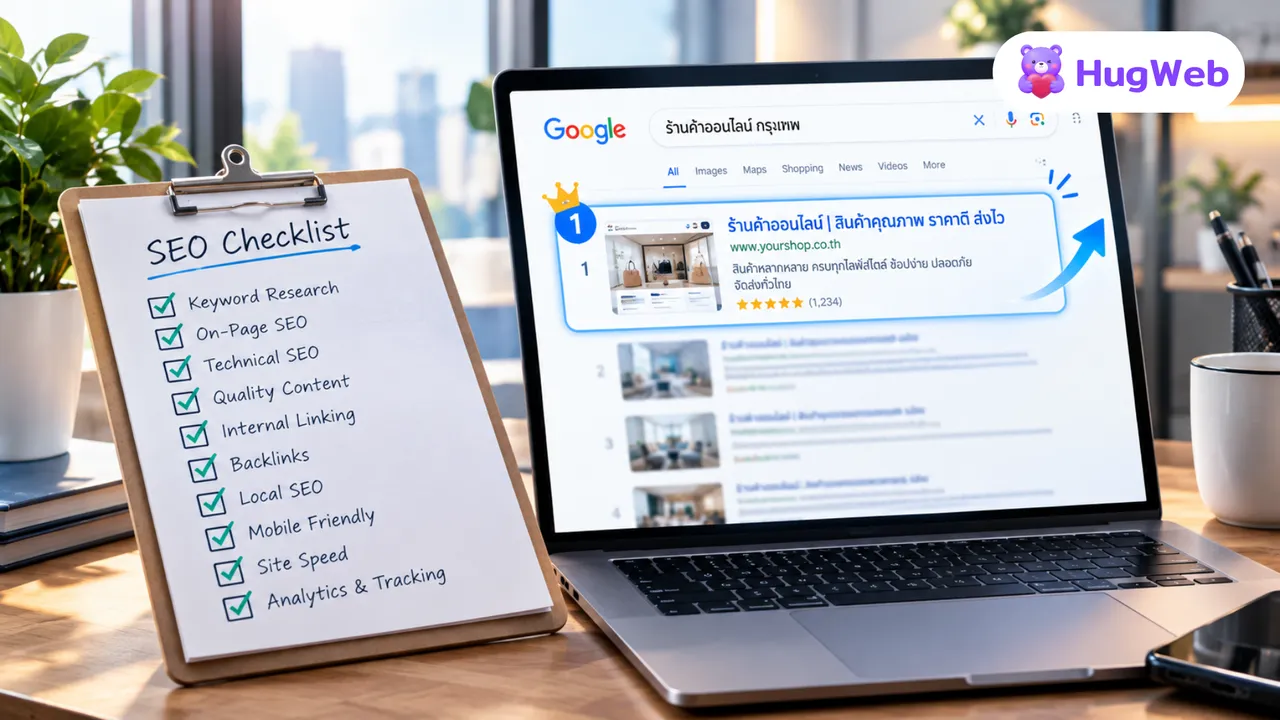
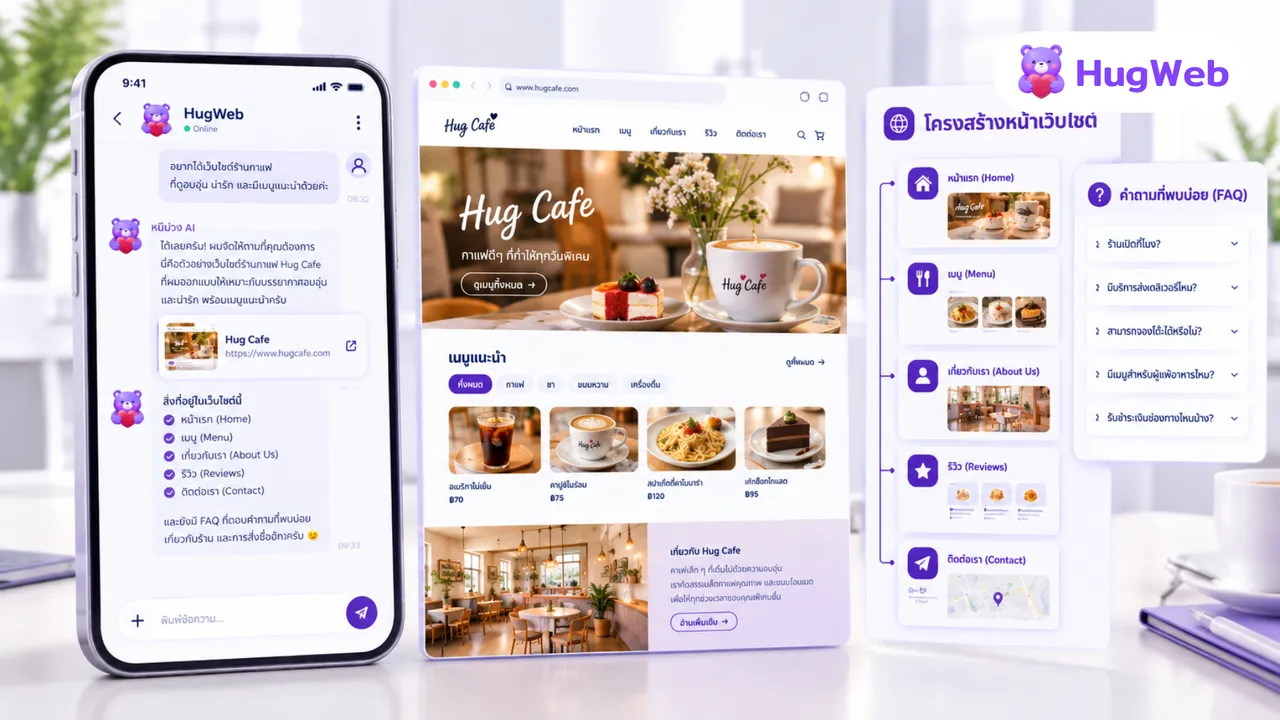
Search behavior is shifting. Instead of typing keywords into Google and clicking through links one by one, many people now ask AI assistants directly—such as "Where are cozy cafes to work near Ari?" or "How do I choose sunscreen for sensitive skin?"—and get concise summaries in seconds. Even Google now displays AI-generated summaries right at the top of search results.
The critical question for business owners is: When AI answers, is your website part of that answer? This article breaks down the concepts of AEO and GEO in simple terms and outlines how to structure your website to be ready for AI search.
What are AEO and GEO, and How Do They Differ from SEO?
SEO (Search Engine Optimization): The practice of optimizing your website to rank higher in traditional link-based search results. The goal is to get clicks to your site.
AEO (Answer Engine Optimization): The practice of optimizing content so that "answer engines"—such as Google's direct answer boxes, voice assistants, or chatbots—can easily extract and use it. The goal is for your content to be the answer.
Generative Engine Optimization (GEO): The practice of optimizing your website so that Generative AI models understand, trust, and reference it when summarizing answers for users. The goal is for your brand to be mentioned and linked within AI-generated responses.
The good news is that these three concepts do not conflict with one another. SEO for AI largely builds upon solid traditional SEO fundamentals, with a heightened focus on clarity, structure, and credibility.
What Kind of Content Does AI Choose to Answer Queries?
While every system has its own algorithms, AI models generally favor content that:
Directly and concisely answers questions: Users and AI can extract the answer immediately upon reading.
Has a clear structure: Content is systematically broken down into headings rather than long walls of text.
Is credible: Contains specific data, an author or source, and aligns with information from other reliable sources.
Is regularly updated: Information remains fresh and accurate.
7 Ways to Structure Your Website for AI Search
1. Use Questions Real Customers Ask as Your Headings
Instead of using a generic heading like "Service Information," change it to "How long does a gel manicure take?" or "How many days does provincial shipping take?" Headings like this match how people talk to AI, making it easier for AI to map questions to answers on your site.
2. Answer Immediately in the First Paragraph of Each Section
Write using an "answer first, details later" approach. The first sentence under a heading should answer the question right away. For example:
How many days does provincial shipping take? Generally 2–3 business days after payment confirmation. Remote areas may require an additional 1–2 days.
This format allows AI to instantly extract the snippet, and human readers love it too.
3. Build a Comprehensive FAQ Page
An FAQ page is an AEO goldmine. Gather the frequent questions customers ask via chat or inbox and answer them clearly on your website. The more direct and complete your answers, the higher the chance AI will feature them.
4. Implement Structured Data (Schema Markup)
Structured Data or Schema Markup is code that "labels" your website content so search engines and AI understand what everything represents, such as:
LocalBusiness: Business name, address, opening hours, phone number.
Product: Product name, price, availability.
FAQPage: Questions and answers.
Article: Article title, author, publication date.
While this sounds technical, many modern website builders handle this behind the scenes so business owners can focus purely on providing accurate information.
5. Clearly Display Credibility Signals
AI and search engines prioritize trustworthy sources. Consider adding these elements to your site:
An "About Us" page explaining who your business is and your history.
Author names and relevant expertise for articles.
Real customer reviews, certifications, or awards.
Consistent contact information across your website, Google Business Profile, and social media channels.
6. Use Specific Data Instead of Vague Claims
Phrases like "high-quality products at low prices" are practically useless to AI because every business says them. Instead, use tangible details: "100% hand-woven cotton dyed with natural indigo by weaving groups in Sakon Nakhon Province." Specific data gives AI a solid reason to reference your website.
7. Maintain a Clean, Fast Website Structure
AI and search engines must be able to crawl your site before they can use its content. Ensure that:
Key content is actual text rather than text embedded purely within images.
Headings follow the correct hierarchical order (H1, H2, H3).
Your website loads quickly and performs well on mobile devices.
You have a valid sitemap and do not accidentally block important pages from being indexed.
Quick Checklist: Is Your Website Ready for AI Search?
[ ] Headings are phrased as real customer questions.
[ ] The first paragraph of each section answers the question immediately.
[ ] There is a regularly updated FAQ page.
[ ] Structured Data is implemented for businesses, products, and articles.
[ ] An "About Us" page, author bylines, and real reviews are present.
[ ] Contact information is consistent across all channels.
[ ] The website is fast and mobile-friendly.
Start with a Well-Structured Website from Day One
Optimizing an older website for AI Search often requires overhauling multiple sections. However, when building a new website, setting up the proper structure from the very beginning is much easier. When you build your site with HugWeb, you can instruct Purple Bear to help organize your web pages following the principles outlined in this article—for example:
"Help me create an FAQ page for my store covering shipping fees, delivery times, and return policies."
You can then easily fill in your store's specific details.
Conclusion
AI Search does not replace SEO; it raises the bar for quality content. Websites with clear answers, systematic structures, and proven credibility will gain an advantage on both Google and within AI-generated responses. Adapting today ensures your business is mentioned when customers ask AI to find products or services just like yours.
👉 Build your website with HugWeb: Start a website built from the ground up for the AI Search era using Thai chat.