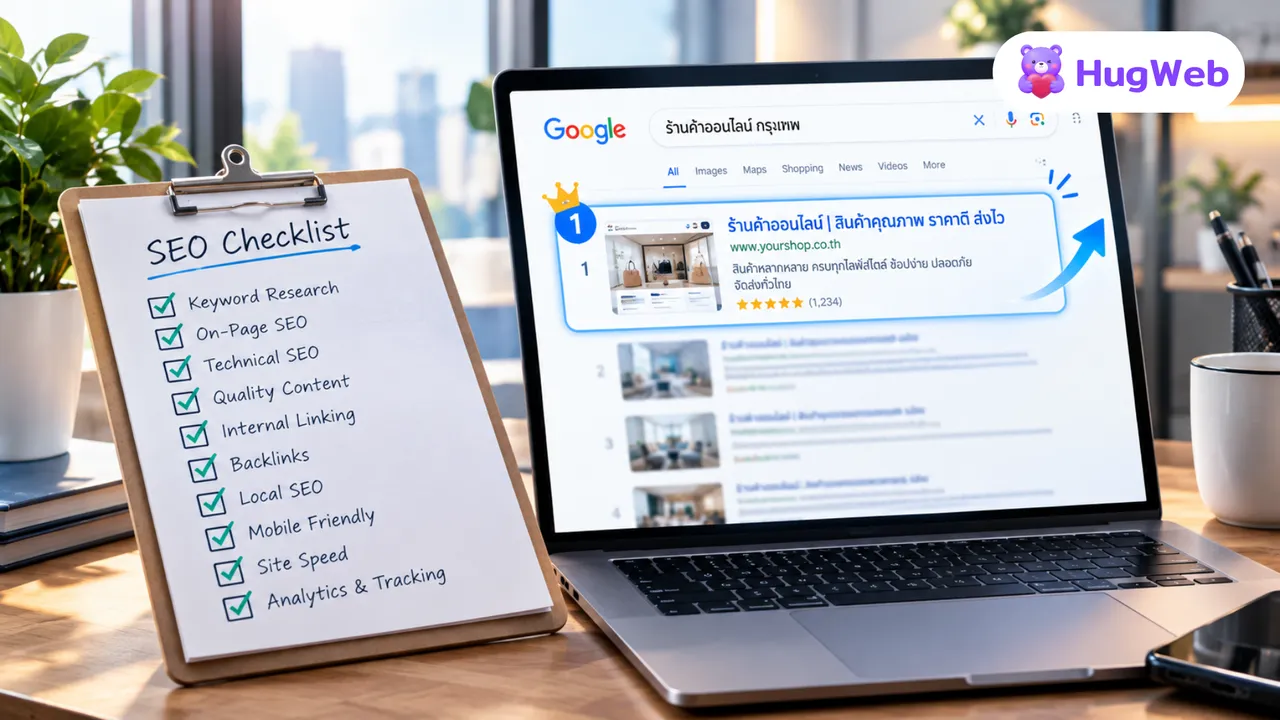
Basic SEO Checklist for SME Websites to Rank on Google's First Page
"My website is done, but whenever I search for my products on Google, I still can't find it."
This is a problem many SMEs face after launching a website. Having a website doesn't automatically mean Google will recommend it to your customers. What's missing is SEO (Search Engine Optimization)—optimizing your website so search engines can understand it and see its value.
The good news is that SEO for SMEs doesn't always have to be complicated or require expensive experts. Most basics can be done yourself. This article compiles an essential SEO checklist for small business websites, broken down by category so you can follow it step-by-step.
Category 1: Technical Foundations
This is the "foundation." If it's not solid, no matter how good your content is, Google might not display your site.
Use HTTPS: Features a padlock icon in the address bar, a security signal prioritized by both Google and customers.
Mobile-Friendly: Most customers access websites via smartphones, and Google evaluates websites primarily based on their mobile version.
Fast Loading Speed: Compress images before uploading; avoid unnecessarily large videos or images.
Have a sitemap.xml: A site map that helps Google know what pages exist.
Register with Google Search Console: A free tool from Google that tells you whether your site has been indexed, what search terms it ranks for, and if there are any issues.
Clean URLs: E.g.,
/products/handmade-soapis better than/p?id=8823.
Most modern website builders handle HTTPS, mobile responsiveness, and sitemaps automatically, but it's always good to double-check.
Category 2: On-Page SEO
This part tells Google clearly what each page is about.
Unique Page Titles: Include primary keywords and your brand name, e.g., "Organic Handmade Honey Soap | Baan Soap Shop".
Click-Worthy Meta Descriptions: Briefly summarize the page's content in 1–2 sentences, acting like an advertisement banner in search results.
One H1 Tag Per Page: Must match the primary topic of that page.
Use H2 and H3 for Subheadings: Helps both human readers and Google.
Natural Keyword Placement: Include keywords in the title, first paragraph, and content without overstuffing.
Alt Text for All Images: Describe what the image depicts to help it rank in image searches.
Internal Linking: Connect related pages, such as linking a review article to a product page.
Category 3: Content
Google wants to recommend websites that best answer searchers' questions, making content the heart of SEO.
Know What Your Customers Search For: Type business-related terms into Google to check auto-suggestions and the "People also ask" section.
One Page, One Goal: Each page should focus on one primary keyword group.
Original Content: Do not entirely copy product descriptions from other websites or manufacturers.
Blog or Article Section: Answer customer questions, e.g., "How to choose soap for dry skin," to attract people who don't yet know your brand.
Regular Updates: Keep prices, products, and information current.
FAQ Page: Compile frequently asked questions to help with both SEO and AI Search.
Category 4: Local SEO
If your business has a physical store or serves a specific area, this category is crucial because people frequently search for "...near me."
Register Google Business Profile: Get your store listed on Google Maps with photos, business hours, and reviews.
Consistent Contact Info: Store name, address, and phone number must match across your website, Google Maps, and social media.
Include Location Names in Content: E.g., "AC repair shop in Bangna" on your service page.
Encourage Customer Reviews: Google reviews impact local rankings and build trust.
Category 5: Credibility & Trust
About Us Page: Tell customers who you are, what you do, and how long you've been in business.
Contact Page: Provide real, working contact channels.
Real Reviews or Portfolio: Showcase them on your website.
Backlinks from Other Sites: Mentions in local media, trade associations, or partner sites. Quality links from relevant sites boost your credibility in Google's eyes.
SEO Takes Time—Don't Give Up Yet
One thing to know is that SEO is not like paid ads where you see results instantly. A new website might take several months to rank for competitive keywords. For SMEs, an effective approach is to start with specific long-tail keywords, such as "handmade honey soap for dry skin" instead of just "soap." This has less competition and targets higher-intent buyers.
The upside is that once your website ranks, it will continuously attract customers without you having to pay for ads every single time someone clicks.
Start with a Website Built for Easy SEO Basics
The checklist above might look long, but many items become much simpler if your website builder handles them from the start. When building a website with HugWeb, you can let Nong Mee Muang (Purple Bear) help draft titles, meta descriptions, and image alt text, or help structure your web page headings systematically, allowing you to review and customize them for your business.
Conclusion
Ranking on Google's first page isn't about luck; it's the result of covering all the basics consistently. Start with technical foundations, move on to on-page SEO, content that answers customer queries, local SEO, and credibility. Save this checklist and check items off one by one—your website will grow stronger in the eyes of both Google and your customers.
👉 Try building a website with HugWeb—launch an SEO-ready site using Thai chat prompts, no coding required.